

Sel du Ponant
Coarse grey-tinged crystals, irregular, robust grain structure.
Faint marine, mineral, gentle Atlantic iodine.
Robust mineral salinity, structured.
Magnesium and calcium minerality, faint Atlantic iodine, clay-trace character.
Coarse grain, persistent crunch, slow dissolution.
Long mineral-saline, slightly oxidative.
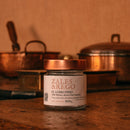
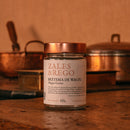
The salt marshes of the Île de Ré were first worked between the twelfth and thirteenth centuries by the monks of Saint-Michel-en-l'Herm. By the nineteenth century the marshes covered nearly a fifth of the island, worked by a thousand sauniers. Industrial pressure in the twentieth century pushed the producers to organise, culminating in 1942 with the founding of the Coopérative des Sauniers de l'Île de Ré, which today unites most of the island's producers across more than four hundred hectares of marsh. In 2023, the island's salt and Fleur de Sel received IGP status from the European Union.
The method has not changed in a thousand years: coarse salt forms at the bottom of natural clay basins, harvested by hand with a simoussi, piled into pyramids to dry, and packaged each September. No chemical weedkillers, no washing, no additives.
Coopérative des Sauniers de l'Île de Ré
Sun. Wind. Clay basins.
“The sea gave up its salt centuries ago. We only wait for the wind to finish the work.”


